12.07.2026
High End Technology
We develop extraordinary camera systems for highly demanding defence, police and security, industrial and medical customers that require a solution.
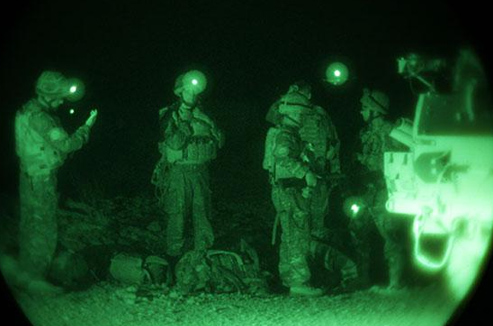
Improving technology allows for cameras to evolve to digital night vision with the quality of image intensified, direct view, night vision goggles. But the vulnerability to bright light sources remains. In the dismounted soldier domain this is not a big issue since a simple head move, away from the light source will do the trick. Also improvements on tube protection like “auto gating” have extended the life time of the image intensifier tubes. When implementing image intensifiers into digital video cameras, a simple head move is just not possible and “normal” auto gating will no longer do the trick to extend the tube’s life time. Therefore a new technique called Virtual Iris™ has been developed that will protect the tube against bright light sources that remain in the image for longer periods. This technique acts in a similar way the human eye would react to exposure to bright light, making tubes embedding this technology better suitable for camera usage than tubes without. Because of this, digital night vision cameras can now be utilized in additional missions where rapid transmission of video for Detection Recognition and Identification is important to gain an advantage in the decision making chain. Just plug the digital output of the night vision camera into any transmission device. Whether it is LINK16 or IP meshing radios, they all can transmit this video. In situations where thermal just isn’t good enough (thermal crossover periods, detecting lights, target identification, shooting video through glass etc.) Image intensified digital cameras will do the trick and will speed up the decision chain. Cameras like ITS’ Alligator for example, are ideal for evidence gathering or ISTAR missions, quickly connectable to any tactical radio or tactical datalink.
Technology
The quality of CMOS and CCD sensors is improving and presently there are a view solid state sensors on the market today that have extraordinary low light level performance. Manufacturers like SONY and Canon have introduced a sensor portfolio which includes sensors for low light level as well. These sensors are suitable for situations where there is some ambient light down to quarter moon situations. Urban areas or local situational awareness all benefit from these sensors and camera systems.
Top off the line full HD tracking and surveillance, CONDOR, camera with ruggedized 10x optical zoom, manufactured by Nedinsco in the Netherlands is featuring remarkably good low light level performance because of a high performance SONY low light level sensor.
If you go darker, magical integration time tricks, frame averaging and illumination will produce a picture that may seem okay at first but… When you want to remain passive, illumination is out of the question. When you want to Detect, Recognize and Identify, longer integration time and frame averaging cause ghosting and smearing video and are not suitable for today’s professionals. Another technology you might consider is Electron Bombarded CMOS technologies. These solutions use a Photocathode to convert Photons to electrons before being accelerated onto the backside illuminated CMOS sensors. Production times are long and costs of these sensors are high so products embedding this technology end up being very expensive. And since a Photocathode is being used, also these sensors are vulnerable to bright (sun) light exposure. Power usage is typically higher than image intensifier tubes so implementation in wearable systems might take a while until either battery performance is improved or power consumption of this technique will be drastically lowered. An affordable alternative to this last technique is the Intensified CMOS technology. An image intensifier tube is being coupled to a Wide Dynamic Range sensor, utilizing the tubes Wide Dynamic Range in the most optimal way.
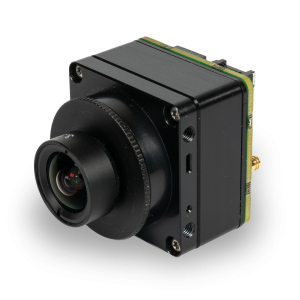
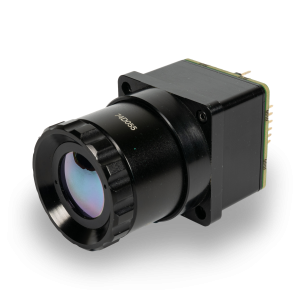
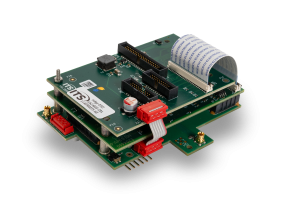
Low power consumption and affordable pricing make this the perfect technology to embed into digital night vision cameras. Even wearables and weapon sights could be upgraded into digital devices with this technology because of the attractive power consumption. Basic image enhancement and noise reduction is available in the Pulsatrix core while maintaining low power consumption. FPGA based processing prevents the video from any kind of time lag and therefore could be utilized in wearable systems without causing problems in eye-brain coordination. You might embed fusion with night vision in future goggles in an “easy way” when using “digital image intensifiers”. Instead of optical fusion, also smart fusion can be implemented into the goggles of the future since thermal and digital night vision can be fused on a pixel by pixel basis. CCD sensors are also used in this domain but are far less common since noise levels are higher and important CCD manufacturers like SONY have discontinued the production of these sensors. It is expected that CMOS sensors will continue to improve their sensitivity in the next couple of years and therefore performance of image intensified CMOS cameras will improve as well. The sensitivity of image intensifiers continuously improves as well. Photonis INTENS 4G tubes have improved sensitivity as well as detection range. Detection of battlefield lasers up to even 1064nm laser illuminators is now possible.
Applications
In theory digital night vision cameras could eventually replace the direct view systems, although power consumption, will be a challenge for years to come. Whether implementing them into goggles, weapon sights and surveillance platforms or when embedding them into driver vision systems or JTAC sensors suites, digital night vision cameras will be the future. Easy data fusion to prevent blue on blue, creating multispectral images when fusing with thermal for faster target acquisition or battle damage assessment, digital night vision cameras will open up possibilities. Combined with other
emerging technologies like Augmented Reality, products like ITS’ Pulsatrix will be disruptive in the military, police and security domain. OEM’s are starting to see the benefits of digital night vision cameras and it will be only a matter of time before they will be general goods.
About Innovative Technical Solutions
Innovative Technical Solutions BV (ITS) is a highly experienced Electro-Optical, IR and Thermal camera development and production company. We develop extraordinary camera systems for highly demanding defence, police and security, industrial and medical customers that require a solution they can’t find on the shelve. Night vision surveillance systems, High Dynamic Range cameras, multi- spectral cameras and EO/IR fusion are some of our specialities, serving specialist operators and OEM manufacturers around the globe. Are you a professional, looking for a solution to your vision challenge, don’t hesitate to contact us so we can solve it together. But also OEM’s, looking for camera core solutions to their imaging problems: reach out to us so we can be part of your large projects. ITS engineers combine engineering passion with ages of experience in the high-tech industry. PCB design, VHDL, hard-, soft and firmware design, mechanical design we can help. Creativity, flexibility, quality, high-end, niche product development and production are our core competences.
ITS, Creating extraordinary camera technology for extraordinary customers.
Whenever, wherever!